
Judicial Review of Visa Refusal in Canada
If your Canadian visa application has been refused, it does not mean the end of the road. If you believe your visa was rejected unfairly or due to a fundamental error, you can request a Judicial Review through the Federal Court of Canada. In fact, when there is a legal or procedural error in the immigration officer’s decision, one of the most effective ways to challenge the refusal is by applying to the Federal Court. This process can provide you with a second chance to obtain your visa.
Pars Nova, with the accompaniment of the official Canadian immigration lawyer – Ms. Behnaz Arabian, with her expertise and experience in this field, can effectively defend you in the Canadian court against visa rejection. If you need consultation in this regard, simply fill out the immigration assessment formor the form below and wait for a call from our experts.
Immigration Assessment
Take the first step toward your new life abroad. Fill out the form and our experts will contact you to discuss your best options.
"*" indicates required fields
What Is the Federal Court (Corte) and Why Choose It?
In the context of Canadian visas, “the court” refers to the Federal Court of Canada. A Judicial Review in the Federal Court is a legal process where a judge evaluates how Immigration, Refugees and Citizenship Canada (IRCC) made its decision. Simply put, by submitting a Judicial Review application, you are asking the court to determine whether your visa refusal was a reasonable and lawful decision.
This is different from a regular administrative appeal, because the court does not re-evaluate your documents or reconsider the case from scratch. Instead, it focuses strictly on whether the immigration officer’s decision was legally and procedurally sound.
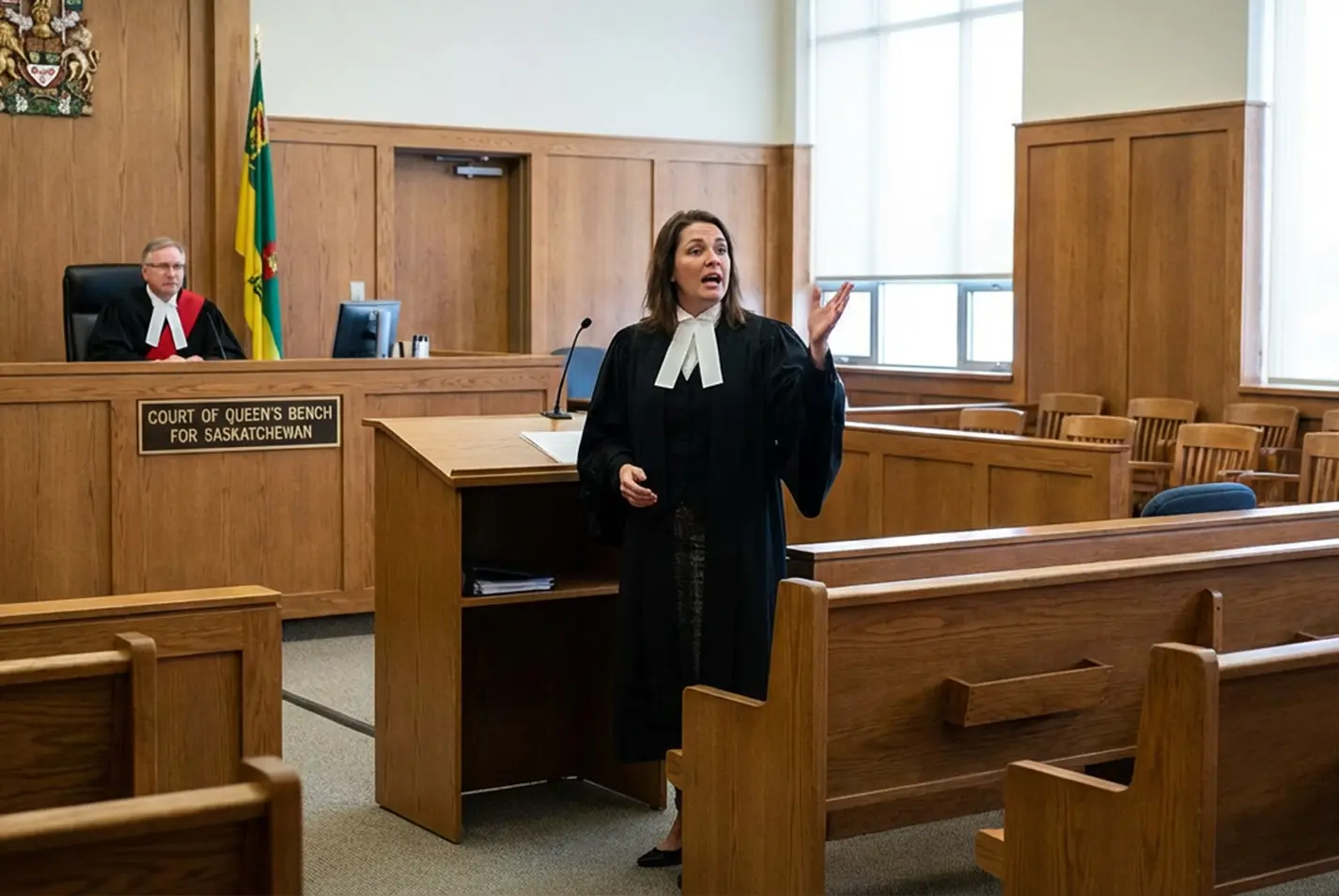
Why Should You Go to Federal Court of Canada?
First, for many temporary visa types—such as study permits or visitor visas—there is no internal appeal process within IRCC. In such cases, the Federal Court is the only official avenue to challenge a refusal.
Second, if you believe a mistake was made in your case, going to court offers a strong opportunity to correct that error. Experience shows that when immigration officers make one or more clear mistakes, the chances of winning at court are significantly higher.
There have been applicants who were refused multiple times for vague or repetitive reasons, but after filing a case in court, the decision was overturned, and they were granted a visa. Therefore, when facing an unfair refusal, the Federal Court can be a powerful legal path to defend your rights.
Conditions for Filing a Judicial Review in the Federal Court of Canada
To challenge a visa refusal in the Federal Court, you must present strong and legally valid reasons. Simply being unhappy with the result is not enough—you must demonstrate that the immigration officer made a legal or logical error, such as ignoring your documents or misapplying the law.
Additionally, your request is subject to strict time limits. If you received the refusal decision inside Canada, you have only 15 days, and if the decision was made outside Canada, you have 60 days to file your Judicial Review application. Missing these deadlines means you lose your right to take the matter to court.
It’s also important to note that a Judicial Review is not a full reconsideration of your case. You cannot submit new documents or re-explain your situation. The judge will only assess the process and reasoning used by the officer to determine if the decision was fair and reasonable. The court bases its judgment solely on the materials that were originally available to the officer. If an error is identified in that context, the decision may be overturned.
Therefore, only proceed with filing a Judicial Review if you truly have a solid argument and can prove the officer’s decision was unreasonable or unfair.
Who Represents You in Federal Court of Canada?
Under Canadian immigration law, submitting a Judicial Review application to the Federal Court must be done by a lawyer. Immigration, Refugees and Citizenship Canada (IRCC) clearly states that only a licensed lawyer can file such applications on your behalf.
This means immigration consultants (RCICs) are not authorized to represent you in Federal Court, and you yourself should not act alone—unless you have substantial legal expertise. In practice, there are only two people who can defend your case in court: either you personally (in rare cases), or your lawyer, who must be a registered member of a Canadian law society.
Given the complexity of Federal Court procedures, most applicants hire an experienced immigration lawyer. Judicial Review is a technical legal process, and having a knowledgeable lawyer greatly improves your chances of success. A qualified immigration lawyer knows how to present strong legal arguments, meet all deadlines and formalities, and advocate for your rights effectively.
For this reason, our team at Pars Nava Immigration is ready to provide full court-related services. If your visa was refused and you believe it was unjust, simply fill out the consultation form below, and our advisors will contact you shortly.
Immigration Assessment
Take the first step toward your new life abroad. Fill out the form and our experts will contact you to discuss your best options.
"*" indicates required fields
Steps to Appeal and Overturn a Canadian Visa Refusal in Federal Court
Filing a Judicial Review against a visa refusal in the Federal Court involves several consecutive stages, as outlined below:
1. Filing the Application with the Federal Court
The process begins by submitting a formal Application for Leave and Judicial Review to the Federal Court. This application notifies both the court and IRCC that you intend to legally challenge the refusal. Your lawyer will include a summary of the reasons for the appeal, while the Department of Justice (the government’s legal representative) will submit a Notice of Appearance to indicate their intention to defend the decision.
2. Receiving the Refusal Reasons (Rule 9)
If the complete reasons for refusal were not provided with your original rejection letter, the court will request IRCC to submit a Rule 9 package. This usually includes the immigration officer’s internal notes (e.g., from the GCMS system) explaining why the application was refused. This step is crucial as it forms the foundation of your legal defense.
3. Preparing and Submitting the Applicant’s Record
Once you receive the refusal reasons, your lawyer typically has 75 days to prepare and file a comprehensive Applicant’s Record. This document includes detailed legal arguments and supporting materials to demonstrate why the officer’s decision was unreasonable or incorrect under immigration law.
4. Responding Submission by the Government (if provided)
After you file your Applicant’s Record, the Department of Justice may file a Respondent’s Record within about 30 days. This document defends the visa officer’s decision and challenges your arguments. Both submissions become part of the court file.
5. Your Reply to the Government’s Response
If the government files a response, your lawyer generally has around 10 days to submit a Reply addressing any objections raised. This step is optional and depends on the government’s participation. Once filed, all written submissions are complete, and the case moves forward for judicial consideration.
6. Leave Stage – Initial Judicial Decision
At this stage, a Federal Court judge will review all submissions to determine whether your case deserves a formal hearing. This is known as the Leave stage. The judge makes this decision based on the written materials—no oral hearing is held at this point. In most immigration cases (around 80%), the court dismisses the application at this stage. However, if the judge finds sufficient merit, the Leave is granted, and your case proceeds to a full hearing. If Leave is denied, the case is closed, and no further appeal is possible.
7. The Hearing
If Leave is granted, a hearing is scheduled—usually within 30 to 90 days. During this session, your lawyer presents oral arguments showing that the officer made errors in assessing facts or interpreting the law. The government’s lawyer responds in defense of the original decision. The judge may ask questions but mostly listens to the legal arguments. No new evidence can be submitted at the hearing. The judge bases their ruling entirely on the original case materials. After the hearing, the judge does not give an immediate decision but issues a written ruling within a few weeks or months.
8. Return of the Case to IRCC (if successful)
If the judge rules in your favor, the Federal Court sets aside the previous refusal and refers your case back to IRCC for reconsideration. Importantly, the court does not issue a visa directly. Instead, it instructs IRCC to assign a different officer to review your application without bias, and in light of the judge’s findings.
9. Request for Updated Documents from IRCC
Following a court victory (or in some settlements), your IRCC online profile is reopened, and you may be asked to submit updated documents—such as financial statements, employment records, or other supporting evidence. These updates help the new officer reassess your situation accurately. Providing these documents quickly and completely improves your chances of success.
10. Final Decision and Visa Issuance
The new officer will review all documents, including the updated materials, and make a final decision. If you’ve resolved the previous concerns and your file is strong, a positive outcome is likely. Although a visa is not guaranteed even after court success, experience shows that IRCC often issues visas in cases returned by the Federal Court.
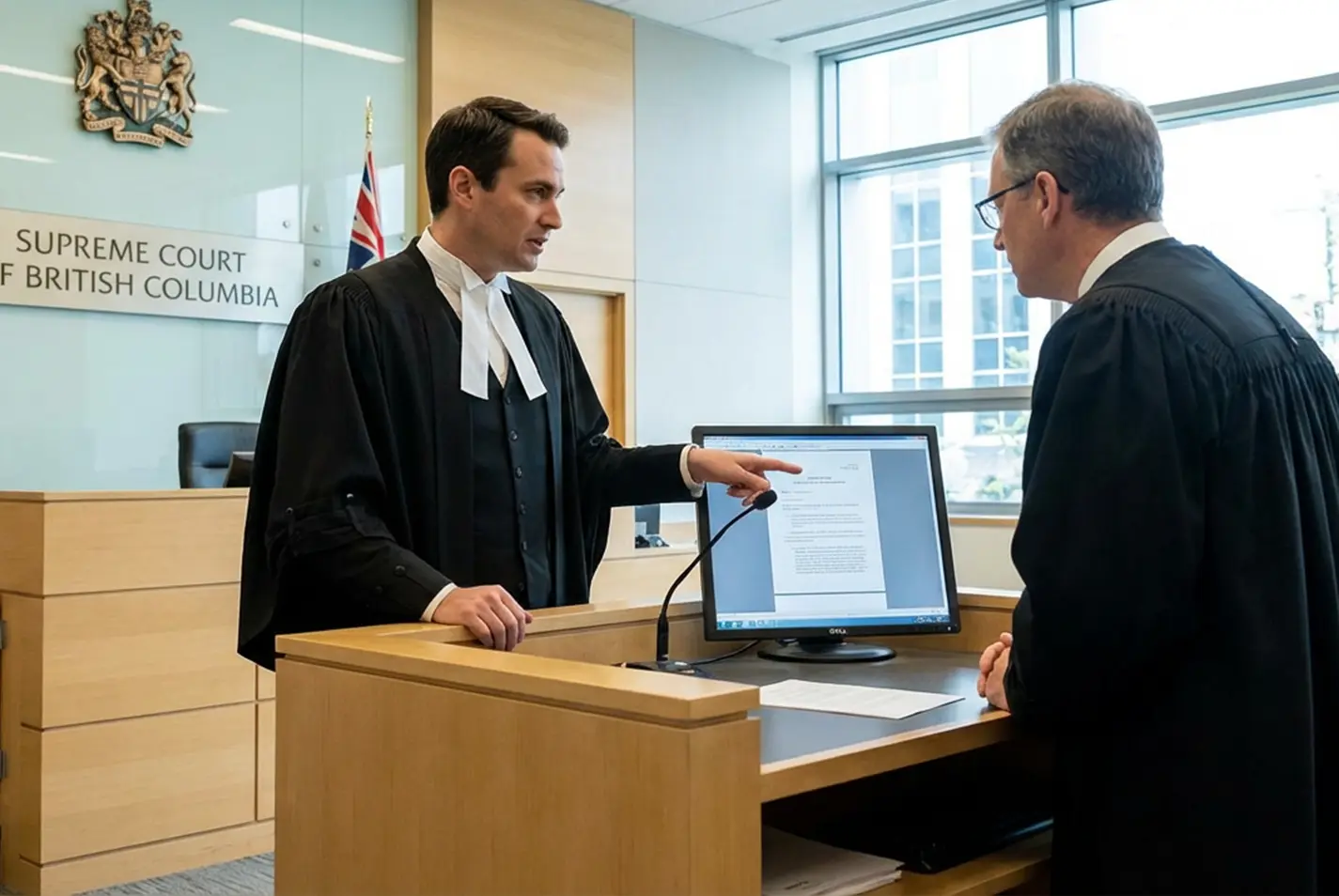
Possibility of Settlement Between Steps 2 and 7
An important point to consider during the above steps is the possibility of reaching a settlement agreement before the court hearing takes place. In many cases, after the initial exchange of documents (between steps 2 and 7), the Department of Justice may decide to resolve the case without proceeding to a full hearing.
This agreement—known as a Settlement—means the government’s legal representatives acknowledge that a mistake may have occurred or that further review is warranted. As a result, they agree to withdraw the refusal and send the application back to IRCC for reconsideration, without the need for a court hearing.
The major advantage of settlement is that it saves time and costs for both parties. With a fair agreement in place, there is no need to continue the legal battle through to a hearing, and the case moves forward more quickly. In fact, statistics show that a significant number of Federal Court immigration cases are resolved through settlement before a judge’s decision is ever issued.
In one example, an applicant who had been refused five times eventually filed a court case. Before the hearing, the government agreed to settle and re-examined the file—which ultimately resulted in visa approval. This demonstrates that even without reaching the final court stage, a strong legal case can lead to a positive outcome through negotiation.
Cost of Going to Court in Canada (Challenging a Visa Refusal)
Challenging a Canadian visa refusal through the Federal Court of Canada, known as a Judicial Review, involves several clearly defined cost components. The main costs include the following:
1. Official court filing fee
To file an application for Leave and Judicial Review, a fixed fee of CAD $50 is charged by the Federal Court. This fee is the same for all visa types (study, work, visitor, etc.) and does not vary.
2. Immigration lawyer’s fees
The largest portion of the cost usually relates to legal fees. Depending on the complexity of the case, the volume of documentation, and the lawyer’s experience, the cost of challenging a visa refusal typically ranges between CAD $5,000 and $15,000.
In straightforward cases, the cost may be lower, while more complex cases (such as misrepresentation or extensive documentation) can be more expensive. Some lawyers charge a flat fee, while others bill hourly (usually CAD $250–$300 per hour).
3. Possible additional costs
- Certified translation of documents that are not in English or French
- Courier and formal service costs for serving documents on the Government of Canada
- Travel expenses (if you choose to attend the court hearing, which is usually not required)
- Possible payment of a portion of the government’s legal costs (Cost Award) if the application is unsuccessful
How Long Does It Take to Resolve a Canadian Visa Refusal?
Challenging a visa refusal in the Federal Court is a two-stage process and, contrary to common belief, it is not immediate or short-term. Processing times depend on factors such as court workload, case complexity, and the responsiveness of immigration authorities.
Stage 1: Leave (Permission to Proceed)
- This stage typically takes about 3 to 6 months.
Stage 2: Judicial Review Hearing
- Scheduling the hearing: approximately 1 to 3 months after Leave is granted
- Issuance of the final decision: approximately 1 to 6 months after the hearing
Overall timeline for overturning a visa refusal through court
- Best-case scenario: about 5 to 6 months
- Typical timeframe: about 8 to 12 months
- High-volume or complex cases: sometimes more than one year
Overturning a Canadian Visitor Visa Refusal
A refusal of a Canadian visitor visa (Temporary Resident Visa) is not the end of the road. Similar to other visa types, there are several ways to respond to a refusal: reapplying, submitting a reconsideration request, or ultimately pursuing a Judicial Review in Federal Court.
If you believe the reasons for your refusal were unfair or based on errors in the assessment, you have the legal right to challenge it—even for a visitor visa. Experience shows that when a visa officer makes a mistake, it is possible to reverse the decision through court action.
In practice, many applicants choose to reapply after correcting mistakes and strengthening their documents, which can often be effective. However, if refusals continue and the reasons given are vague, repetitive, or unreasonable, taking the case to court becomes a more serious and potentially effective option.
Therefore, it is important to carefully assess the reasons behind your refusal. If you believe submitting stronger documents may be enough, then reapplying makes sense. But if your case is still being denied despite sufficient evidence, pursuing a Judicial Review may be the appropriate legal path to assert your rights.
Pars Nova’s Services for Overturning Visa Refusals in Federal Court
Pars Nava Immigration Services, with years of experience in handling visa refusals and legal immigration appeals, supports your case from start to finish. With the help of licensed Canadian immigration consultants (CICC members) and experienced Federal Court lawyers, our team thoroughly reviews the reasons for refusal and evaluates the chances of success. If the conditions are favorable, we will prepare and submit a formal court application and professionally manage all stages of the legal process.
Pars Nava’s legal team maintains a high success rate by only pursuing court cases that are legally justified. With well-prepared documentation, strong legal arguments, and—where possible—negotiation for a quicker and more cost-effective resolution, this strategic approach has resulted in many successful visa approvals for our clients.
From the moment you receive a refusal letter until the final visa decision, Pars Nava provides full and step-by-step support. If your Canadian visa has been refused and you believe the decision was unfair, take action now.
👉 To receive a free preliminary case review and a personalized action plan (reapplication, reconsideration, or court appeal), fill out the assessment form. Our team will contact you promptly.